
Boardshorts Are Swimwear’s New Power Move
The boardshorts swimwear trend didn’t arrive quietly. It showed up on beaches this summer looking like it had never left — baggy, cinched at the waist, cut somewhere between a surf uniform and a menswear flex. String bikinis are still around. But the girl commanding attention on the sand right now isn’t wearing three triangles of fabric. She’s wearing something with pockets.
What Changed
For most of the last decade, swimwear kept shrinking. Cheekier cuts, higher legs, less coverage — the trajectory was obvious. Boardshorts reverse that entirely. They’re loose through the thigh, sit low or mid-rise depending on the brand, and often come with a drawstring waist that says function first, decoration second.
That shift matters because it changes what swimwear communicates. A string bikini photographs a body. Boardshorts photograph a person doing something — paddling out, running a shoreline, sitting on a board waiting for a set. The silhouette reads as active rather than posed, and that distinction is exactly what’s pulling in a generation of women who grew up watching surf content instead of just swimwear ads.
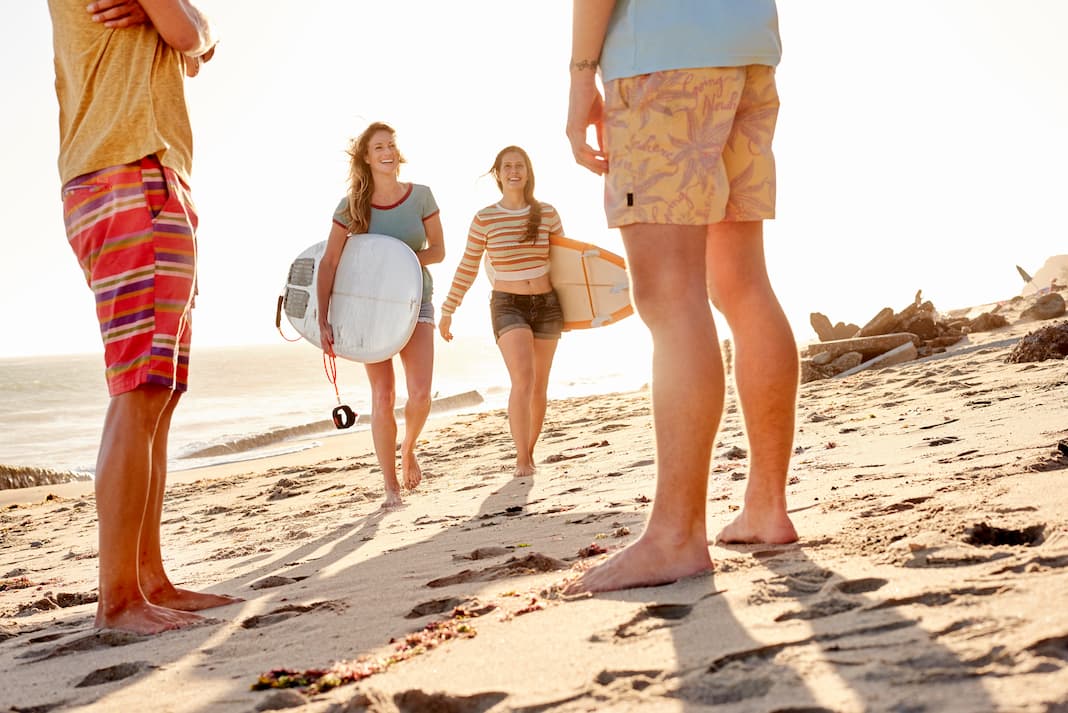
Who’s Actually Wearing Them
Surfers wore boardshorts because bikini bottoms don’t survive a wipeout. That practical origin is still doing a lot of work in how the trend is being adopted now. Women who surf, paddleboard, or spend real time in moving water are the ones normalizing the look on the sand, not just in the lineup. Everyone else followed because the styling options turned out to be more interesting than expected.
Boardshorts paired with a fitted rash guard or a simple triangle top read as sport-luxe. Boardshorts paired with a delicate gold chain and a bare torso read as beach-glam. The same pair styled with an oversized button-down and slides works walking to lunch off the sand. That versatility is the actual reason the trend has legs beyond one season — it’s not a single look, it’s a base layer for several.
How to Wear Them Without Looking Costume-y
The failure mode with boardshorts is going too literal — full competition-cut surf gear head to toe, which reads more contest-day than beach day. The styling that’s working right now treats boardshorts as one strong piece in an otherwise pared-back outfit, not a full uniform.
- Balance proportion. If the shorts are loose and long, keep the top fitted and simple — a bandeau, a triangle top, or a cropped rash guard.
- Pick one hardware detail, not five. A single drawstring or contrast stitch reads intentional. Snaps, zippers, and toggles all at once reads like gear, not style.
- Let the waist do the work. Mid-rise with a visible waistband cinch gives shape where the loose leg takes it away — skip this and the whole look can go shapeless fast.
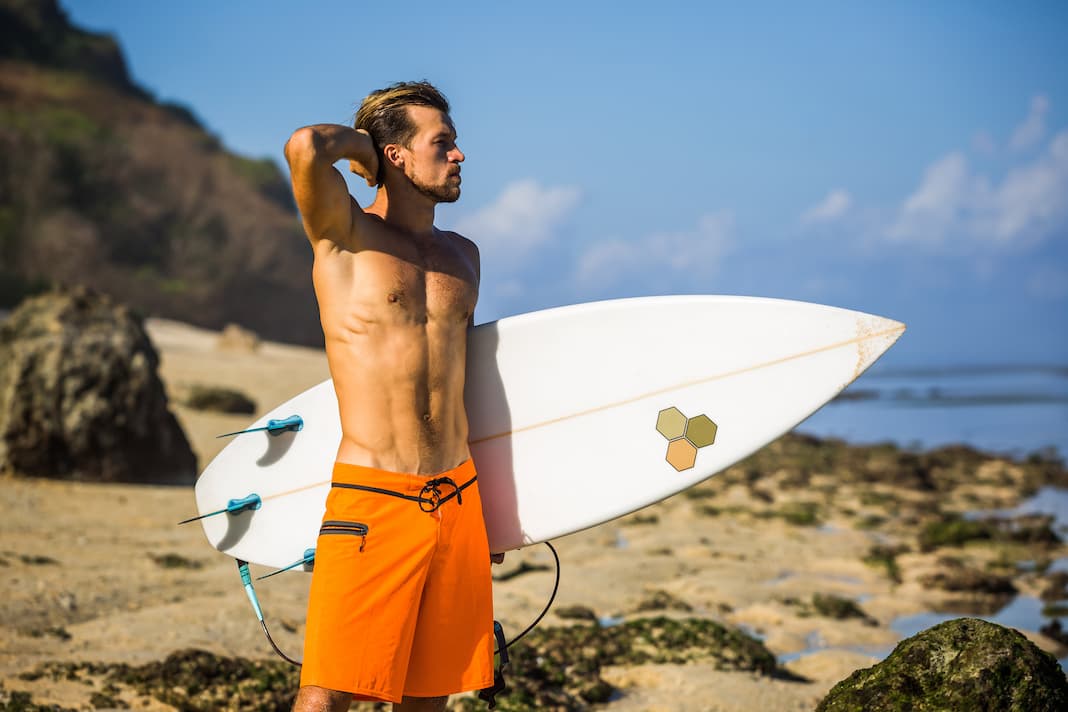
Why This Is Sticking Around
Trends built purely on aesthetics tend to burn out in a season. Trends built on function last longer, because they solve a real problem. Boardshorts solve the problem of swimwear that has to survive actual movement — paddling, running, sitting on rough sand, getting knocked around by a shore break — without falling apart or requiring constant readjustment. That’s not a marketing angle. That’s just what happens when you put a bikini bottom through a real wave.
The result is a swimwear category that photographs beautifully but was never designed for photographs first. That’s a rare combination, and it’s why the boardshorts swimwear trend feels less like a passing color-of-the-season moment and more like a genuine shift in what women want their swimwear to do for them.

