
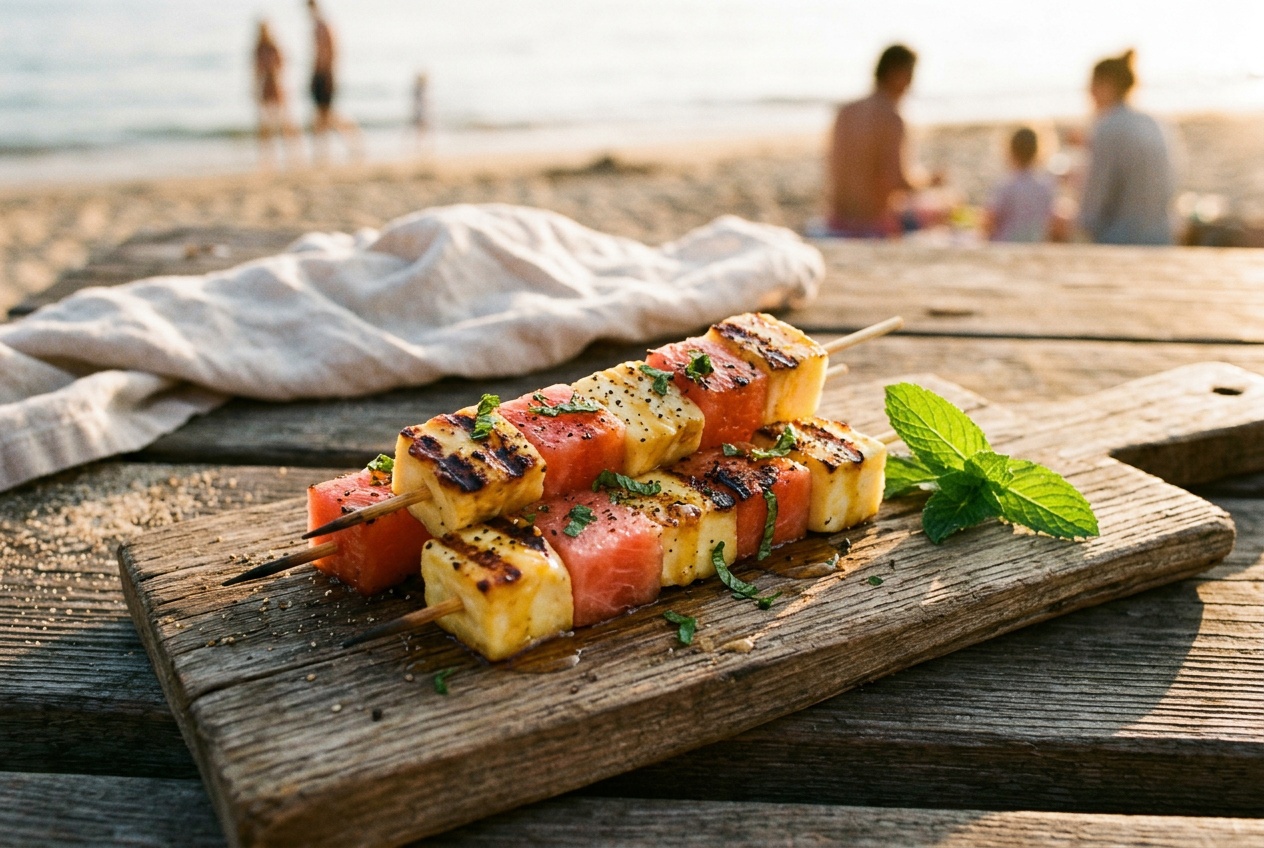
Grilled Watermelon Halloumi Skewers for Beach Nights
The first time these hit the grill, the watermelon blistered and the halloumi turned the color of wet sand — proof that fire turns summer’s most basic fruit into something worth ordering twice. Halloumi’s aggressive saltiness and the fruit’s caramelized sweetness balance each other perfectly, especially once a sticky chili-lime honey ties the whole thing together.
Ingredients
- 1 small seedless watermelon, cut into 1-inch cubes (about 4 cups)
- 8 ounces halloumi cheese, cut into 1-inch cubes
- 2 tablespoons olive oil
- 1/4 cup honey
- 1 tablespoon fresh lime juice (about half a lime)
- 1/2 teaspoon red chili flakes
- 1/4 teaspoon flaky sea salt
- 10 fresh mint leaves, torn
- 8 wooden or metal skewers (if wooden, soak in water for 20 minutes first)
Instructions
- Heat a grill or grill pan to medium-high, around 400°F. Brush the grates with a little oil so nothing sticks.
- Thread alternating cubes of watermelon and halloumi onto the skewers, about 4 pieces of each per skewer. Don’t crowd them together tightly — the fire needs room to actually touch every side.
- Brush the skewers lightly with olive oil on all sides.
- Grill for 2 to 3 minutes per side, rotating once, until the halloumi has deep golden grill marks and the watermelon edges are starting to caramelize and pull slightly from the heat.
- While the skewers cook, whisk together the honey, lime juice, and chili flakes in a small bowl.
- Remove skewers from the grill and arrange on a platter. Drizzle immediately with the chili-lime honey while everything is still warm — the heat helps the honey soak in slightly instead of just sitting on top.
- Scatter torn mint leaves and a pinch of flaky sea salt over the top.
- Serve within 10 minutes, while the halloumi is still soft in the center.
Cook’s Notes
Keep the watermelon cubes at a full inch or they’ll fall apart before they char, and don’t wander off — the fruit’s water content means it can go from perfectly grilled to mush in about 90 seconds. Pat the halloumi dry before oiling it so it doesn’t stick or tear on the flip, and hold off on the chili-lime honey until the skewers come straight off the grill, since warm cheese soaks up flavor differently than cooled cheese.
Ingredient Swaps
No halloumi on hand? A firm feta or paneer can stand in, though they won’t hold quite as well on the grates. Swap the chili flakes for smoked paprika if you want something less sharp, or add a splash of balsamic to the honey for a deeper, more savory glaze.
Serving Suggestions
Pile the skewers onto a big platter and let people pull them off with their hands — this is a stand-around, salt-crusted, barefoot kind of appetizer. Pour something cold and crisp alongside, like a dry rosé or sparkling water with lime, and set out crusty bread for mopping up the extra honey.
Storage & Reheating
These are really a make-and-eat-immediately dish — halloumi turns rubbery and the watermelon gets watery within an hour or two, so don’t plan on leftovers. If you need to prep ahead, cube the watermelon and halloumi and mix the honey glaze separately, then skewer and grill right before serving.
Common Questions
Can I make these ahead of time for a party?
You can cube the watermelon and halloumi and whisk the chili-lime honey a few hours ahead, but hold off on skewering and grilling until just before guests arrive — this dish is best served within minutes of coming off the heat.
What if I don’t have a grill?
A hot grill pan or even a cast-iron skillet works fine indoors; just make sure it’s very hot before the skewers go on so you get real char instead of steamed fruit and cheese.
Why is my halloumi sticking to the grates?
Excess moisture is almost always the culprit — pat the cheese cubes dry with a paper towel before oiling and threading them, and make sure your grates are well-oiled and properly preheated.

