
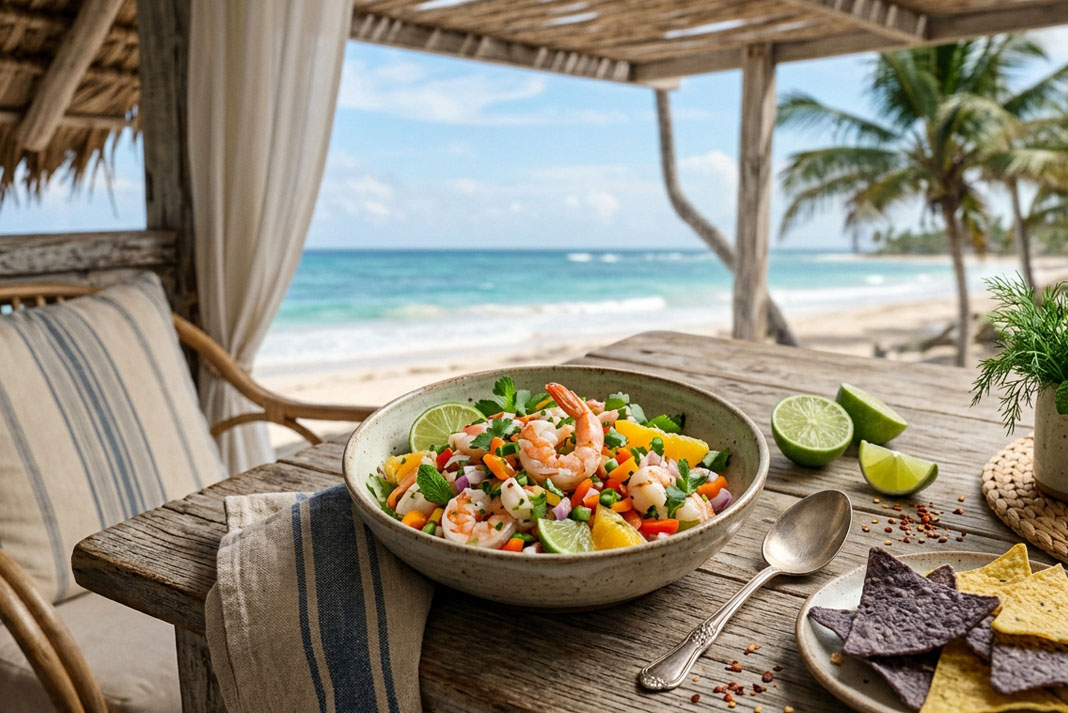
Citrus Shrimp Ceviche for Long Beach Afternoons
The shrimp goes in raw, and ten minutes of quiet lime-juice chemistry later, it isn’t anymore — no stove, no smoke, just a bowl of ice and citrus doing all the work while you set the table with your feet still sandy. It’s the easiest thing to pull together in a rental kitchen with a dull knife, and it only gets better the longer it sits in a cooler.
Ingredients
- 1 pound raw shrimp, peeled, deveined, tails removed, diced into ½-inch pieces
- ¾ cup fresh lime juice (about 6 limes)
- ¼ cup fresh lemon juice (about 2 lemons)
- 1 small red onion, thinly sliced
- 1 jalapeño, seeded and finely diced
- 1 cup cherry tomatoes, quartered
- 1 English cucumber, diced small
- 1 ripe avocado, diced
- ½ cup fresh cilantro, roughly chopped
- 1 tablespoon extra virgin olive oil
- 1 teaspoon sea salt, plus more to taste
- 1 tablespoon orange juice (optional, for rounding out the acid)
- Tortilla chips or tostadas, for serving
Instructions
- In a glass or ceramic bowl, combine the diced shrimp with the lime juice and lemon juice. Make sure every piece is submerged. Metal bowls will react with the acid, so skip those.
- Cover and refrigerate for 20 to 25 minutes, stirring once halfway through. The shrimp is ready when it turns fully opaque and firms up — pink and white, no gray or translucent centers left.
- While the shrimp marinates, prep the red onion, jalapeño, tomatoes, and cucumber. Keep them in a separate bowl until the shrimp is done.
- Once the shrimp has finished marinating, drain off about half the citrus juice, reserving it in case the ceviche needs loosening later.
- Fold the drained shrimp into the bowl with the onion, jalapeño, tomatoes, and cucumber.
- Gently fold in the diced avocado and cilantro last, so they don’t break down or discolor from too much stirring.
- Drizzle with olive oil, add the sea salt, and toss once more. Taste and adjust — a splash of the reserved citrus or the optional orange juice can smooth out sharp edges if the lime is very acidic.
- Serve immediately in chilled bowls or glasses, with tortilla chips or tostadas on the side for scooping.
Cook’s Notes
Buy the shrimp the same day you make this — ceviche is not the place for shrimp that’s been sitting around. Dice it small and uniform so every piece cures at the same rate, don’t let it marinate past 30 minutes or it turns rubbery, and always fold in the avocado at the very end so it doesn’t turn to mush.
Ingredient Swaps
Swap the shrimp for diced firm white fish like halibut or snapper if that’s what’s fresh at the market, and dial the jalapeño up or down depending on how much heat your crowd can handle. Mango or diced pineapple folded in with the tomatoes adds a sweeter, tropical edge if you want to riff on the classic version.
Serving Suggestions
Serve it straight from the cooler in chilled cups or small bowls so everyone can grab their own, with a stack of tortilla chips or tostadas on the side for scooping right there on the towel.
Storage & Reheating
It holds well in a cooler packed with ice for a few hours and actually tastes better cold, though it’s best eaten within the first day since the citrus keeps working on the shrimp and the avocado softens over time.
Common Questions
Is it safe to eat the shrimp raw like this?
The lime and lemon juice cure the shrimp the same way heat would, denaturing the proteins until it’s fully opaque and firm — as long as you use fresh, high-quality shrimp and don’t skip the full marinating time, it’s safe and traditional to eat this way.
Can I make this ahead of time for a beach day?
You can prep the vegetables and marinate the shrimp at home, but hold off on adding the avocado and cilantro until you’re ready to serve so the ceviche stays bright and doesn’t turn mushy in transit.
What if I don’t have fresh limes or lemons?
Bottled juice will technically cure the shrimp, but the flavor is noticeably flatter — fresh citrus is really what makes this dish, so it’s worth squeezing your own if you can.

